Emory NLP Dispatch
Volume 1 · Issue 1 (Spring 2026)
Distinctions

Innovation of the Year
Tinker Tales, an interactive storytelling platform that teaches AI literacy to young learners through play, received the Innovation of the Year Award from the Emory Office of Technology Transfer.
Nayoung Choi and Henry Gao receive CS department annual awards
Four undergraduate students earn degrees with honors
Atlanta Journal-Constitution 2026
Atlanta Journal-Constitution features lab research on AI companions
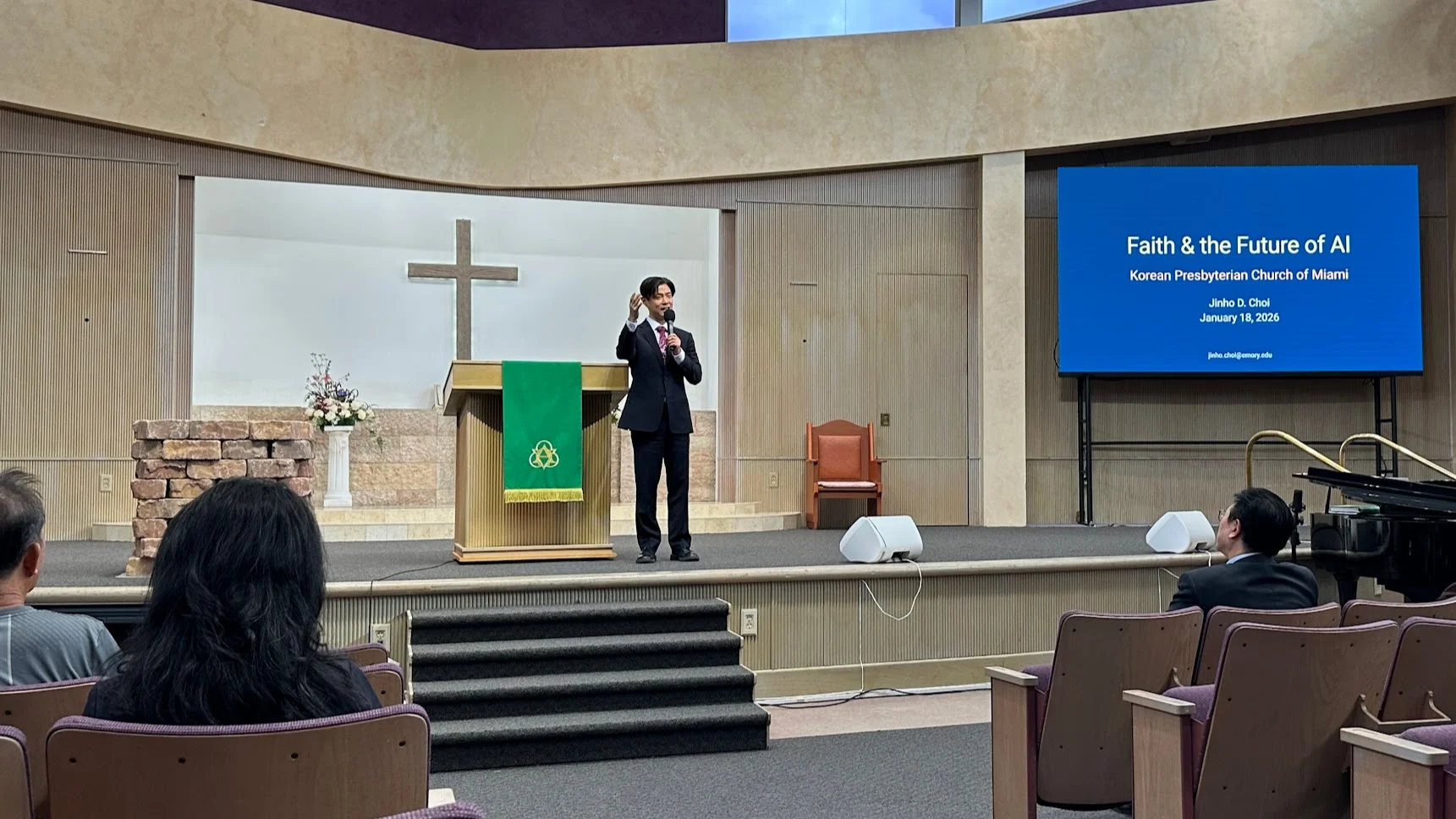
Miami Church/Clergy Association 2026
Invited seminar on faith and the future of AI in Miami



Papers
- AI Safety
- Mental Health
- Crisis/Risk Detection
CRADLE Bench: A Clinician-Annotated Benchmark for Multi-Faceted Mental Health Crisis and Safety Risk Detection
Conference of the European Chapter of the Association for Computational Linguistics (EACL)
Detecting mental health crisis situations such as suicide ideation, rape, domestic violence, child abuse, and sexual harassment is a critical yet underexplored challenge for language models. When such situations arise during user–model interactions, models must reliably flag them, as failure to do so can have serious consequences. In this work, we introduce CRADLE BENCH, a benchmark for multi-faceted crisis detection. Unlike previous efforts that focus on a limited set of crisis types, our benchmark covers seven types defined in line with clinical standards and is the first to incorporate temporal labels. Our benchmark provides 600 clinician-annotated evaluation examples and 420 development examples, together with a training corpus of around 4K examples automatically labeled using a majority-vote ensemble of multiple language models, which significantly outperforms single-model annotation. We further fine-tune six crisis detection models on subsets defined by consensus and unanimous ensemble agreement, providing complementary models trained under different agreement criteria. Content warning: This paper discusses sensitive topics such as suicide ideation, self-harm, rape, domestic violence, and child abuse.
-
 Grace Byun
 - Rebecca Lipschutz
- Sean T. Minton
- Abigail Powers
-
 Jinho D. Choi
- Conversational AI
- Task-oriented Dialogue
- Schema Induction
Generative Induction of Dialogue Task Schemas with Streaming Refinement and Simulated Interactions
- LLM Evaluation
- Mental Health
- Loneliness Detection
Why Are We Lonely? Leveraging LLMs to Measure and Understand Loneliness in Caregivers and Non-caregivers
Theses
- Conversational AI
- General
- Speaker Profiling
From Long-Term Dialogue Memory to Personality Profiling: A Research Trajectory of Repeated Contraction
· MS · Computer Science · Spring 2026
- Conversational AI
- Task-oriented Dialogue
- Prompt Induction
Building Task-Oriented Dialogue Systems via Instruction Guidance without Annotated Data
· BS · Computer Science · Spring 2026
- Multimodal AI
- General
- Emotion Recognition
Beyond Text: LLM-Based Dimensional Emotion Evaluation in Multimodal Dialogue
· BS · Computer Science · Spring 2026
- LLM Evaluation
- Jeopardy
- Instruction Following
Stress Testing Instruction Following in Large Language Models
· BA · Computer Science · Spring 2026
Opinions
The Lights-Out Web
Web content is growing faster than ever. Just not for you.
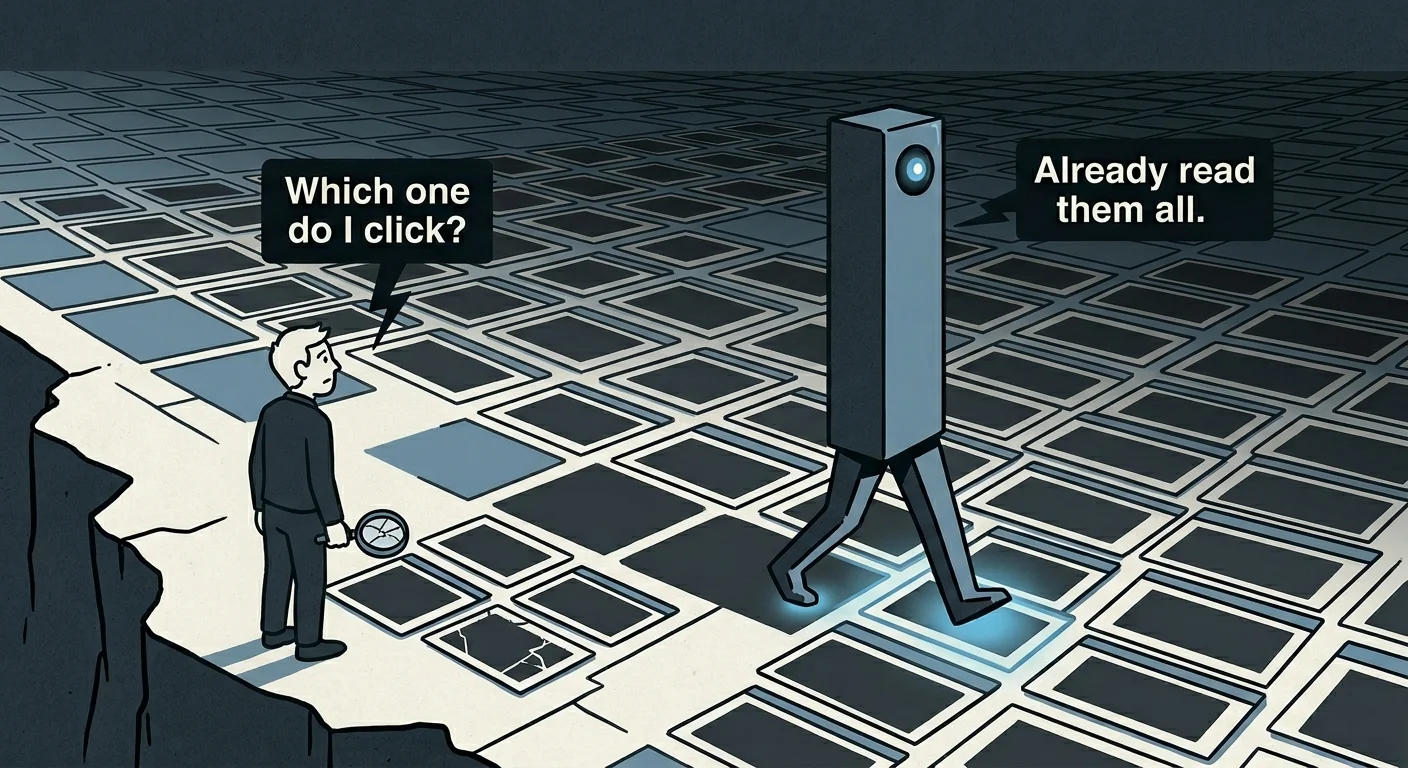
AI has fundamentally changed how we access information on the web. What does that mean for the web itself, and the entire ecosystem built around it?
The web is not dying — it is being rebuilt for a different audience. As AI chat replaces the search engine as the default way people find information, websites are losing their human visitors. This episode examines what happens next: why companies will soon optimize their web presence for AI readers rather than human eyes, what that means for the designers and developers whose jobs depend on the human-facing web, and how AI platforms will take over both the presentation layer and the brand identity layer that websites once owned. The direction is already set. The question is how fast.